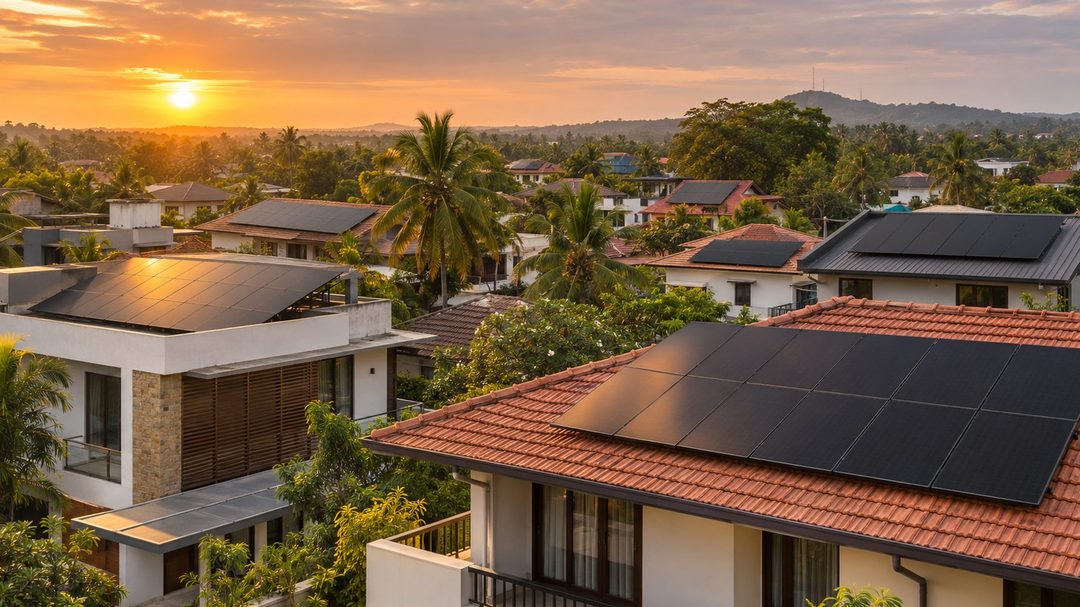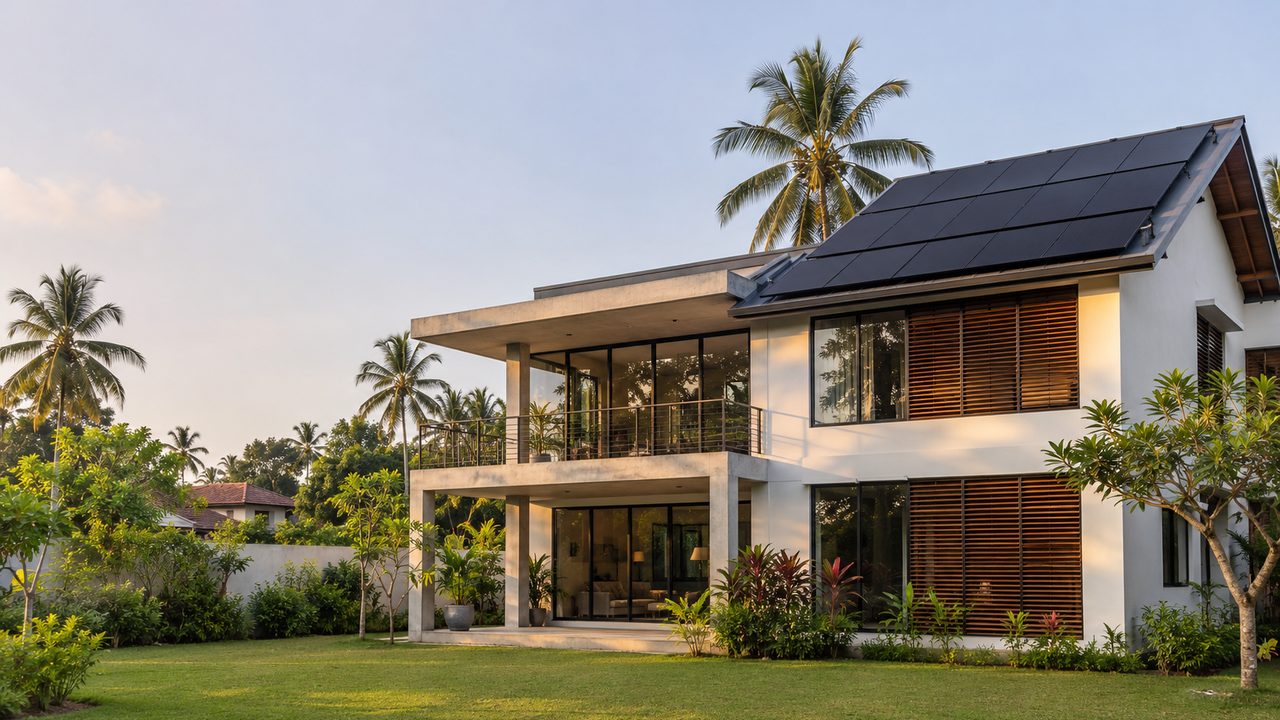
Off-Grid Solar Systems in Sri Lanka: Prices, Sizes and Registered Installers
Run your home on an off-grid solar system in Sri Lanka. Your own panels and batteries, with little or no electricity bill. See starting prices by size below, then get matched with a registered installer.
Or send your load list on WhatsApp: 077 000 0000


Panels charge a battery bank in the day. The batteries run your home at night. It suits homes far from the grid, homes with a weak grid line, estates, farms and holiday homes.
Off-grid solar system prices in Sri Lanka
The price depends on two things: the system size and the battery bank. The battery bank changes the price a lot. It stores power for the night.
| System (inverter) | Panels and roof space | Battery bank | Units a month (about) | Supply | Starting price |
|---|---|---|---|---|---|
| 3kW | 3.1 kWp, 200 sq ft | 6.4-16 kWh | 150-320 | Single-phase | From about Rs 1.4 million |
| 5kW | 5.6 kWp, 360 sq ft | 6.4-32 kWh | 150-600 | Single-phase | From about Rs 1.65 million |
| 6kW (off-grid set) | 3.1-6.2 kWp, 200-400 sq ft | 6.4-32 kWh | 200-800 | Single-phase | From about Rs 1.35 million |
| 10kW | 9.9 kWp, 640 sq ft | 16-48 kWh | 450-1,200 | Three-phase | From about Rs 2.8 million |
Last reviewed November 2026 by Abdul Rahman. Source: a Sri Lankan installer’s published off-grid price list, October 2026.
Each starting price is for the smallest battery bank. The 6kW starting price is for its smallest set, with 5 panels and a 6.4 kWh bank. A bigger battery bank costs more and stores more power for the night.
The 3kW, 5kW and 10kW sets use hybrid-ready inverters set up to run off-grid. Many of these can later send power back to the grid, if CEB or LECO approves it. The 6kW set is sold as off-grid only, and its starting price is lower. Never plan to send power back? Ask about the 6kW set.
The 10kW set gives three-phase power, so ask your installer which supply your wiring needs. Need more than 800 units on single-phase? The same list has a single-phase 12kW set, so ask about it in your quote request.
These are guide prices, not a fixed offer, and prices can change. Partner installers may use other brands, so their prices can differ. Your installer sets the final price after a site visit and inspection. [CONFIRM: the site visit is free]
What pushes the price up or down:
- Battery type and size. Lithium (LiFePO4) costs more up front and lasts more years. Flooded lead-acid costs less but needs more care and an earlier change.
- Inverter size. A bigger inverter runs more at once, like a washing machine, an iron and an AC together. It costs more.
- Panel and inverter brand. Known brands cost more.
- Your site. Long cable runs, underground cabling or a ground frame can add cost. One installer’s list also says sites in the Northern Province may cost more.
Not sure about off-grid? Many “solar system price” lists show on-grid systems with no batteries. Those cost less, but they stop in a power cut. The table further down compares all three types.
What an off-grid solar system includes
Every off-grid system has four main parts. Each one has a clear job.
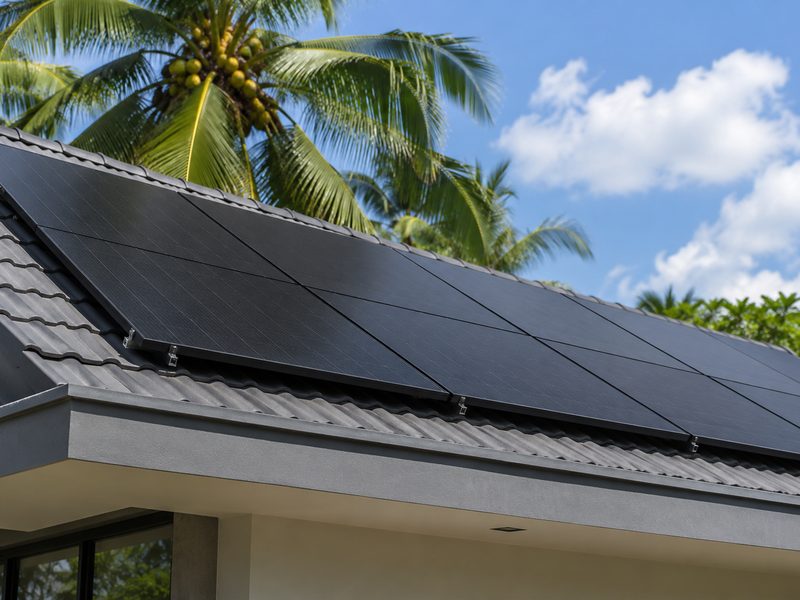
Solar panels
What it does: Turn sunlight into DC power on your roof or a ground frame
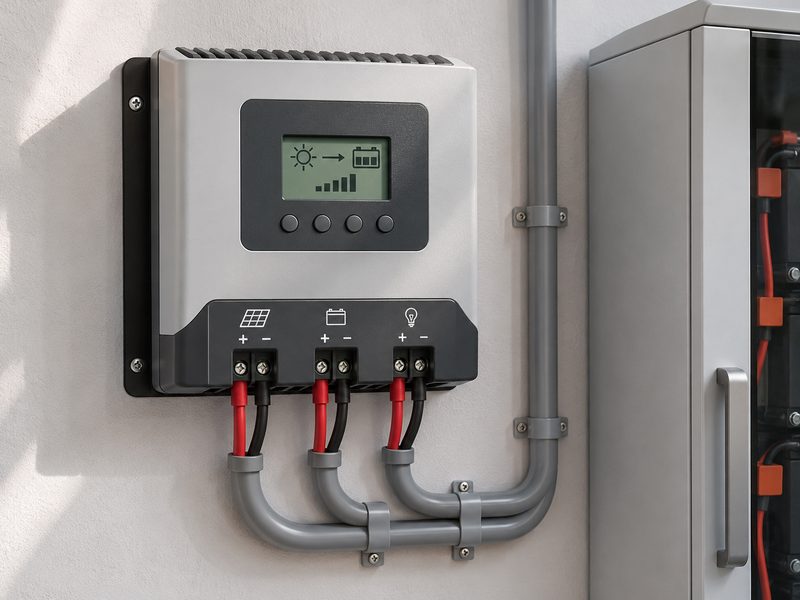
Charge controller
What it does: Charges the batteries safely. Many off-grid inverters have one built in
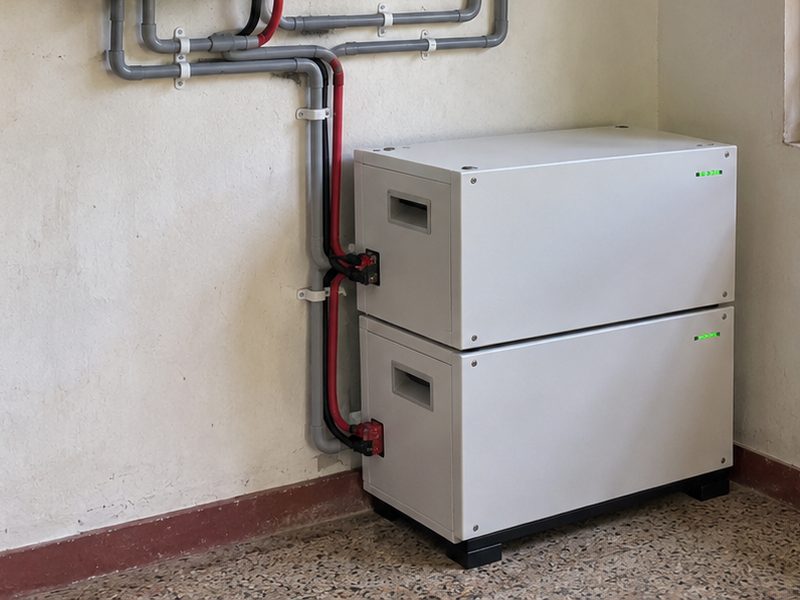
Battery bank
What it does: Stores the day’s power for the night and for rainy days
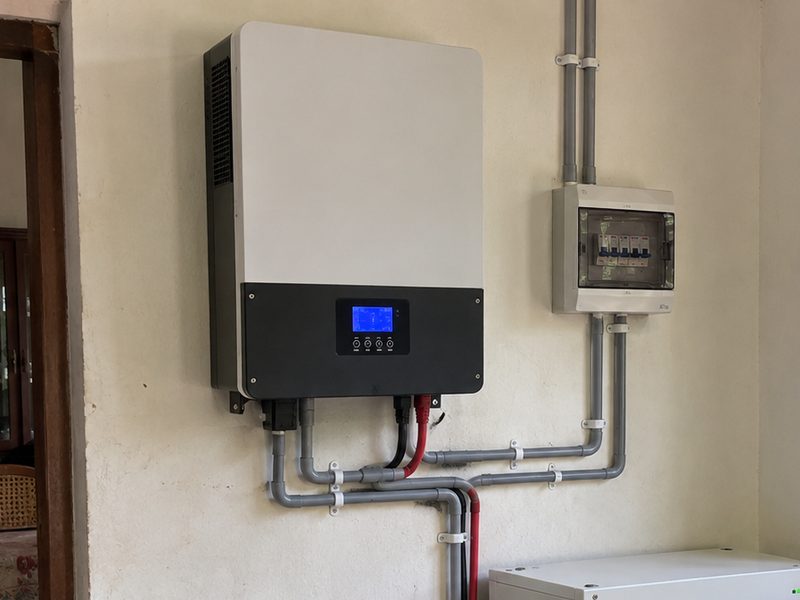
Off-grid inverter
What it does: Changes battery power into 230V AC for your lights, fans and fridge


Your installer also fits the wiring, breakers, earthing and surge protection. They help protect the system and your home. Ask for each one in the written quote.
Which size do you need?
Check the monthly units on your electricity bill. Then find your units in the price table above. The panels set how much power you make in the day. The battery bank sets how much you can use at night. More units need more panels and a bigger battery bank.

No bill to check? List your appliances and the hours you use each one. Send that list to us. [CONFIRM: Q5 who works out the size, and how fast the reply comes. Default if no answer: the installer suggests the size on the call; no time given. Checked: audits/14-final-review-and-questions-14Nov2026.md Q5, not answered by 16 Nov 2026]
Want a quick size first? Put your units or appliance list into the solar calculator. It shows the panels, battery bank and kit that fit.
Each size page lists its battery bank options, the kit parts and its starting prices. Up to about 320 units a month? See the 3kW off-grid solar system. Up to about 600 units? See the 5kW off-grid system with batteries. Single-phase power and 600-800 units? Ask about the 6kW off-grid set in your quote request. Three-phase power and more than 800? See the 10kW off-grid package.
Off-grid, hybrid or on-grid: how they compare
Sri Lankan homes pick from three system types. The big difference is the grid connection.
| Off-grid | Hybrid | On-grid | |
|---|---|---|---|
| Grid connection | Optional, for backup only | Yes, to send power back | Yes |
| Batteries | Yes, sized for every night | Yes, for backup | No |
| Works in a power cut | Yes, while batteries last | Yes, while batteries last | No, it switches off for safety |
| Sells power to the grid | No | Yes, if CEB or LECO allows it | Yes, if CEB or LECO allows it |
| Price | Set mostly by the battery bank | Kit price plus grid work and meter charges | Lowest, no batteries |
| Best for | Remote land, weak grid line, backup with no export | Sending spare power back | A lower bill only |
Sellers use these names in different ways. So ask each installer one question: does this kit send power to the grid?
Do you want to send spare panel power back to the grid? Then look at a hybrid solar system. It still runs your home when the power goes.
From load list to handover: how buying works

- Send your load list.Use the quote form or WhatsApp. Tell us your district, your appliances and your monthly units if you have a bill.
- You get a suggested size.It includes a panel size and battery bank. [CONFIRM: Q5 who suggests the size, what the reply includes, and how fast it comes. Default if no answer: the installer suggests the size on the call; no time given. Checked: audits/14-final-review-and-questions-14Nov2026.md Q5, not answered by 16 Nov 2026]
- A registered installer visits.We pass your request to an SLSEA-registered installer in your district. They check your roof, your wiring and the cable runs. No installer in your district yet? We’ll pass your request on as soon as an installer covers your district. [CONFIRM: Q7 we tell the buyer and keep the request until an installer joins. Default if no answer: yes, as written. Checked: audits/14-final-review-and-questions-14Nov2026.md Q7, not answered by 16 Nov 2026]
- You get the installer’s quote.Ask for it in writing, with the panels, inverter, batteries, warranties and install date. You decide with no pressure.
- Install and handover.The installer fits and tests the system. Ask them to show you the inverter screen and the battery levels. Ask who services the system after the install.
Why use Solvo
- Off-grid is our main work. Each system on this site has its own battery bank.
- Prices before you call. You see a starting price for each size before you ask for a quote.
- SLSEA-registered installers only. We work only with installers registered with SLSEA. SLSEA links its lists of registered providers from its rooftop solar scheme page. Ask your installer for their registration number. [CONFIRM: our own checks on each installer, beyond SLSEA registration]
- Who gets your details. We pass your request to a registered installer in your district. [CONFIRM: Q3 each request goes to one matched installer only, and nobody else gets the buyer’s details. Default if no answer: don’t promise “one”. Checked: audits/14-final-review-and-questions-14Nov2026.md Q3, not answered by 16 Nov 2026]
- How we’re paid. [CONFIRM: Q2 how the site earns, e.g. “Installers pay us a fee. You pay the installer’s price and nothing extra to us.” One answer fills the homepage, partners, about and author bio. Default if no answer: delete this bullet. Checked: audits/14-final-review-and-questions-14Nov2026.md Q2, not answered by 16 Nov 2026]
[HOLD: H2 “Systems fitted by our partner installers”. Add real projects with size, battery, town and photos. Owner’s permission needed.]
Common questions
Is going off-grid with solar worth it?
Off-grid costs more than on-grid because of the batteries. In return your bill drops to little or nothing. Grid cuts don’t stop your power while the batteries have charge. After dull days they can run low, so a grid line or generator backup helps. It’s worth it when the grid line is far away, weak or costly to bring in.
Already have a good grid line? Many off-grid kits can still use it for backup. Want to send spare power back too? Then compare hybrid.
Do I need grid approval for an off-grid system?
An off-grid system sends no power to the grid. Many off-grid kits can still pull power from a grid line for backup. No power goes back, so there’s no net metering or export agreement to sign. Ask your installer to set the kit to send no power back. Also ask if CEB or LECO needs to know about your backup line.
Can I add more panels or batteries later?
Panels, yes in many cases. Batteries, sometimes. Your inverter and battery type set the limit, so ask for a kit with room to grow.
What happens on cloudy or rainy days?
The panels still make some power, but less. The battery bank covers the gap. Many inverters can also charge the batteries from a small generator in long monsoon spells.
How much upkeep does an off-grid system need?
Lithium systems need little upkeep. Flooded lead-acid batteries also need regular water top-ups. Ask your installer how to clean your panels safely, and never climb onto the roof yourself. Once a year, ask a registered installer or a qualified electrician to check the wiring and batteries.
What warranties should I ask for?
Ask for four warranties in writing: panels, inverter, batteries and the install work. Panel makers often give 25 years on output, with a shorter product warranty. Lithium battery warranties vary, often up to 10 years.
Do you cover my area?
[CONFIRM: we take requests from every district in Sri Lanka; installer cover by district once partners sign]
Get your solar quote
Tell us your district and your appliances. Then send them to us with the quote form.
This page is general information, not electrical advice. Your installer confirms the size and price after a site visit and inspection.